Wealth Income 2026: Complete Tax Guide

You receive rent, dividends, or interest and you’re wondering how the tax authorities will tax them in 2026? Understanding the tax rules that apply to your wealth income is essential to manage your finances effectively. Between the Prélèvement Forfaitaire Unique (PFU), the option for the progressive income tax scale, and the various social contributions, the tax landscape can seem complex. All the more so as changes—especially an increase in the CSG—are on the horizon, making clear, up-to-date information more necessary than ever.
What is wealth income?
Before diving into the intricacies of taxation, it is crucial to define what is meant by “wealth income”. It includes all gains and proceeds generated by the movable and immovable assets you own, excluding income from professional activity such as salaries or pensions.
They are mainly grouped into three major categories:
- Income from real estate assets : These are the best-known. They include rent received from letting an unfurnished property (rental income) or a furnished one (industrial and commercial profits), life annuities, as well as capital gains realized when selling a property.
- Income from financial assets : Also called income from movable capital, it covers a wide range of products. This includes stock dividends, interest from your investments (non-regulated savings accounts, bonds), gains from life insurance contracts, and capital gains from the sale of securities (shares, equity interests, etc.).
- Income from other assets : This residual category covers gains made from selling valuables such as works of art, jewelry, or precious metals.
Each of these categories follows specific taxation rules, whether for income tax or social contributions.
Income tax: the showdown between PFU and the progressive scale
For most financial income (dividends, interest, capital gains on securities), the French tax system offers by default a simple, readable mechanism: the Prélèvement Forfaitaire Unique (PFU), more commonly known as the “flat tax”.
Since it was introduced, this withholding has been set at an overall rate of 30 %. This single rate is broken down into two distinct parts:
- 12,8 % for income tax.
- 17,2 % for social contributions.
However, the PFU is not unavoidable. Every taxpayer can waive this flat-rate withholding and choose to have all of their movable capital income taxed under the progressive income tax scale. This option must be exercised when filing the tax return and applies to all financial wealth income for the year.
When is opting for the scale a good idea?
The choice between PFU and the progressive scale depends entirely on your personal tax situation, in particular your Marginal Tax Rate (TMI). Opting for the scale becomes advantageous if your TMI is 0 % or 11 %. In that case, the income tax rate will be lower than the PFU’s 12,8 %. In addition, choosing the scale allows you to benefit from certain allowances, such as the 40 % allowance on stock dividends, which can further reduce the taxable base.
A global and irrevocable option
Choosing taxation under the progressive scale is a global decision. It applies to all of your investment income and capital gains for the year. It is impossible to choose the PFU for your interest and the scale for your dividends. Once selected on your return, this option is irrevocable for the income of the year concerned.
Social contributions: an unavoidable component
Whatever option you choose for income tax, wealth income is systematically subject to social contributions. They finance part of social protection and apply even to certain income exempt from income tax.
The standard overall rate is 17,2 %. It breaks down as follows:
- Contribution Sociale Généralisée (CSG) : 9,2 %
- Contribution au Remboursement de la Dette Sociale (CRDS) : 0,5 %
- Solidarity Levy : 7,5 %
These contributions apply to almost all wealth income, from rental income to real estate capital gains, including the proceeds of most financial investments. Only a few regulated savings products, such as the Livret A, the Livret de Développement Durable et Solidaire (LDDS) or the Livret d'Épargne Populaire (LEP), benefit from a full exemption.
Focus on the CSG increase in 2026: which income is concerned?
The year 2026 should mark a turning point in capital taxation. The Social Security Financing Act provides for an increase in the CSG on certain income, raising its rate from 9,2 % to 10,6 %. This measure, intended to finance the “Autonomy” branch, will have a direct impact on the overall taxation rate of several types of investments.
For the income concerned, the total rate of social contributions will rise from 17,2 % to 18,6 %. As a result, the PFU (flat tax) applicable to those same income streams will go from 30 % to 31,4 % (12,8 % income tax + 18,6 % social contributions).
It is crucial to note that this increase will not apply uniformly. The legislator sought to preserve certain areas of savings.
Here is an overview of the income that would be affected by this measure:
- Dividends and interest (income from fixed-income investments).
- Capital gains from the sale of securities (shares, bonds, etc.).
- Non-professional furnished rental income (LMNP), which is treated as industrial and commercial profits (BIC).
Conversely, several major categories of income would keep social contributions at 17,2 %:
- Rental income from unfurnished letting.
- Real estate capital gains, which already benefit from a specific tax regime.
- Proceeds from assurance-vie and home savings plans (PEL).
This distinction will create a two-speed tax landscape for capital income, making wealth strategy even more decisive.
The impact on deductible CSG
For taxpayers who opt for the progressive scale, a portion of the CSG paid on their wealth income (up to 6,8 points) is deductible from their total taxable income the following year. The reform does not plan to increase this deductible portion. The CSG increase will therefore translate into an additional net tax burden, with no offset in terms of deductibility.
The specific taxation of real estate income
Income generated from real estate follows its own rules, distinct from those for financial investments. It is never subject to the PFU and always falls under the progressive income tax scale, to which social contributions of 17,2 % are added.
The main distinction depends on the type of letting:
- Unfurnished letting : Rent is classified as rental income. It is taxed after deducting actual expenses or applying a flat-rate allowance (micro-foncier regime).
- Furnished letting : Rent is treated as Industrial and Commercial Profits (BIC). The LMNP status is often preferred for its advantageous depreciation rules. As seen above, this income should be subject to the CSG increase in 2026.
In addition, net taxable real estate assets exceeding 1,3 million euros are subject to the Impôt sur la Fortune Immobilière (IFI), a tax that taxes holding wealth rather than the income it generates.
Reporting and wealth diversification
Wealth income is reported in the spring, at the same time as other income. Depending on the nature of the gains, different appendices to the main form (no. 2042) must be completed: 2044 for rental income, 2074 for capital gains on securities, 2042-C-PRO for furnished rental income, etc.
Faced with complex and evolving taxation, diversifying your assets becomes a strategic lever. It is no longer only about seeking returns, but also about optimizing the overall tax burden.
As an investor, my experience has taught me that looking only at a product’s gross return is a mistake. Taxation can take up to a third—or even more—of performance. That is why I have always analyzed performance net of fees and net of taxes. In the 2010s, when interest rates were low, many turned to rental property without anticipating the weight of social contributions at 17,2%. Today, with the CSG increase on financial assets, the same reasoning applies: you must anticipate and compare.
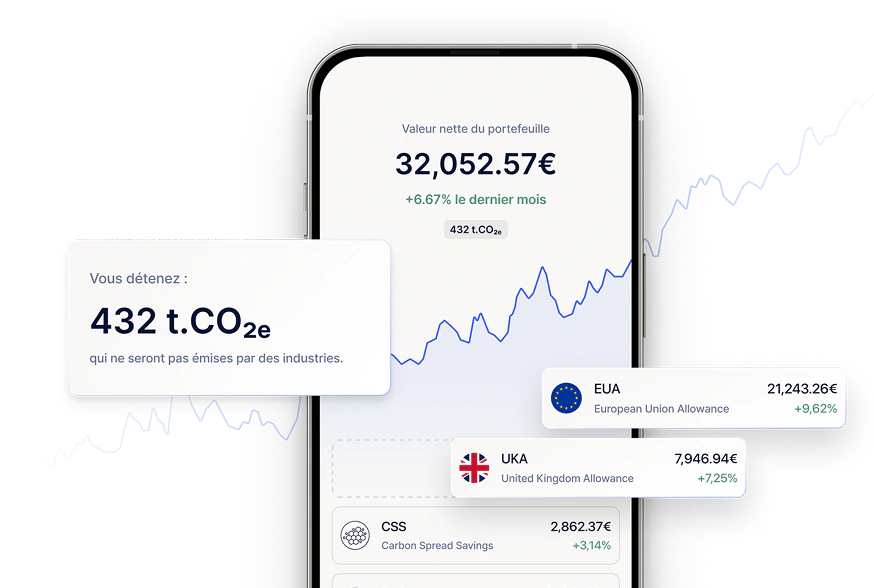
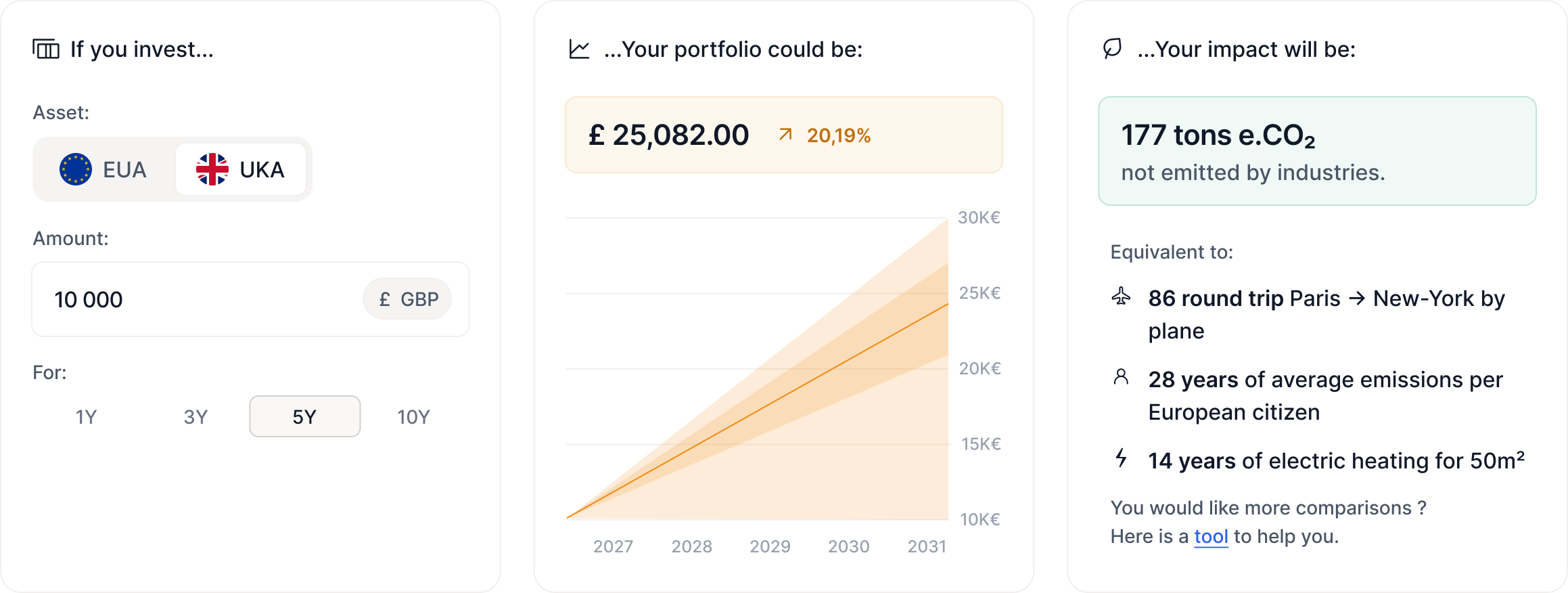
Beyond traditional assets such as equities and real estate, new asset classes are emerging, offering risk and return profiles that are uncorrelated. For example, investing in regulated environmental assets, such as European carbon allowances, is gaining in popularity. The capital gains generated by this type of innovative investment fall into the category of capital gains on securities. They are therefore subject to the PFU, and potentially to the increased rate of 31,4 % from 2026. This highlights the importance of integrating taxation into every investment decision, whether conventional or innovative.
Tax wrappers to prioritize
To optimize the taxation of your investments, certain “wrappers” benefit from favorable regimes. The Plan d'Épargne en Actions (PEA) (French equity savings plan), after 5 years of holding, provides an exemption from income tax on capital gains (only social contributions remain due). Likewise, assurance-vie offers reduced taxation after 8 years, with annual allowances on gains.
The taxation of wealth income in 2026 is shaping up to be more segmented than ever. The targeted CSG increase complicates trade-offs and reinforces the importance of a 360-degree view of your assets. Understanding the rules applicable to each type of income, anticipating legislative changes, and structuring your wealth accordingly are the keys to preserving and growing your capital over the long term. Sound wealth management does not merely generate income; it ensures that its tax treatment is optimized.
FAQ
What distinguishes wealth income from employment income?
Employment income (wages, salaries, fees) remunerates an active professional activity. Wealth income, by contrast, is “passive” income generated by the assets you own (real estate and financial capital), without direct work in return. The taxation and social charges applied to them are very different.
How do I report my wealth income?
Reporting is done annually via form no. 2042 and its appendices. Rental income is reported on form no. 2044 (actual regime) or directly on the 2042 (micro-foncier). Income from movable capital (interest, dividends) is generally pre-filled, but you must check the amounts and tick box 2OP to opt for the scale. Capital gains on securities require completing appendix no. 2074.
Are all savings passbooks exempt from social contributions?
No. Only so-called “regulated” savings passbooks benefit from a full exemption (income tax and social contributions): the Livret A, the Livret de Développement Durable et Solidaire (LDDS), the Livret d'Épargne Populaire (LEP) and the Livret Jeune. Other savings products, such as term accounts or home savings plans (PEL) opened after 2018, are taxed.
Are IFI and the tax on wealth income the same thing?
No, they are two distinct taxes. Income tax (to which wealth income is subject) taxes a flow: the money your wealth generates each year. The Impôt sur la Fortune Immobilière (IFI) taxes a stock: the net value of your real estate assets on 1 January of the year, if it exceeds 1,3 million euros.
Can I deduct part of the CSG from my taxes?
Yes, but only if you opted to have your wealth income taxed under the progressive scale. In that case, a fraction of the CSG paid, equal to 6,8 %, is deductible from your total taxable income the following year. If your income is subject to the PFU (flat tax), no portion of the CSG is deductible.
Go further: invest in the carbon market
Homaio gives you access to European carbon allowances (EUAs), an asset class that combines potential financial performance with direct climate impact. Diversify your wealth with an asset uncorrelated from traditional markets, accessible from €1,000.