Responsible Savings Barometer: The French and Responsible Investment

Faced with the climate emergency and growing social tensions, responsible savings are emerging as a concrete response. But where do the French really stand in this transition?
An Asserted Sensitivity, but Persistent Lack of Knowledge
The French are increasingly declaring themselves sensitive to environmental and social issues, according to the Responsible Savings Barometer, measured annually by La Banque Postale and Cashbee.
Let's remain measured in our statements: for the vast majority of savers, the security, liquidity, and return of an investment still occupy the top spots of their priorities. However, the virtuous aspect of their portfolio is gaining importance year after year.
According to the latest barometers, more than 7 out of 10 French people say they want to give meaning to their savings. But it is clear that the concept still remains relatively vague. Thus, barely a quarter of them really know what a SRI (Socially Responsible Investment) labeled fund is.
This paradox illustrates a key point: the interest in responsible savings is very real, but it comes up against a lack of knowledge about the products, a distrust of performance, and sometimes a perceived complexity.
Unsurprisingly, the youngest (18-35 years old) are the most open to these new forms of investment. But it is often those over 45 who hold the most substantial portfolios, creating a gap between intentions and reality. Here too, it makes sense: younger generations save little or not at all, simply because they are still students or have just entered the world of work. Conversely, those in their forties and fifties often hold high-income positions, giving them a much greater savings capacity.
[[cta-discover]]
A Developing Offer, but Still Difficult to Understand
Responsible investment solutions are multiplying: SRI-labeled life insurance, Greenfin, ESG, Finansol, Article 8 funds, Article 9 funds, green bonds, sustainable thematic ETFs, solidarity products, etc. Yet, the French are struggling to find their way.
The cause: the proliferation of labels (SRI, Greenfin, Finansol...) is a source of confusion and sometimes frustration. Especially since the rules adopted by label providers to judge the virtuous qualities of a fund change over time and are not necessarily consistent with each other.
Some products, although promising on paper, still suffer from a lack of clarity about their real environmental or social impact. Savers' expectations are evolving: it is no longer enough to exclude coal; tangible and measurable results must now be demonstrated.
Buying CO₂ Allowances: Savings That Directly Curb Pollution
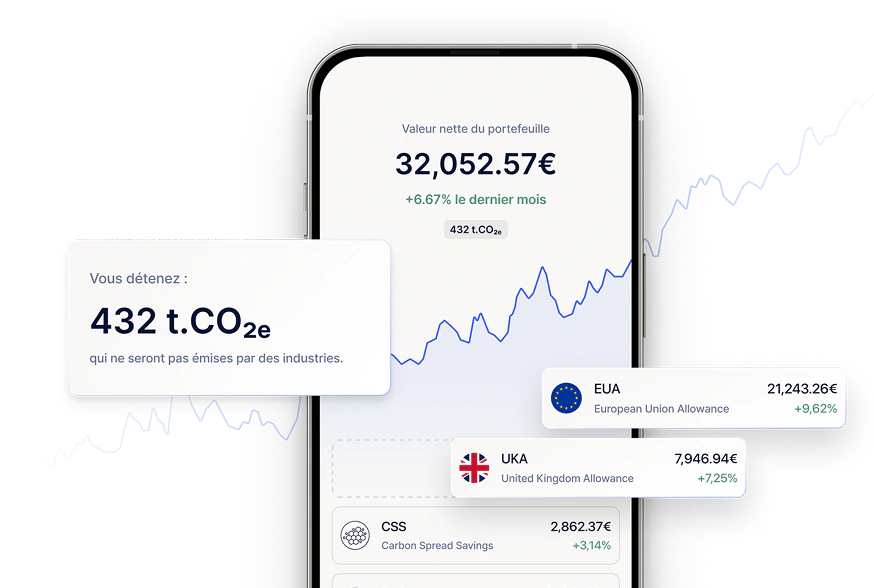
Among the most innovative and radical products, there is an approach still little known to the general public: the purchase of European CO₂ emission allowances (or EUAs, for European Union Allowances).
This system is based on the European Union Emissions Trading System (EU ETS), which imposes an emissions cap on the most polluting industries. These companies must buy allowances to be able to emit CO₂. The number of available allowances is reduced each year by design, increasing their scarcity... and thus encouraging emission reductions.
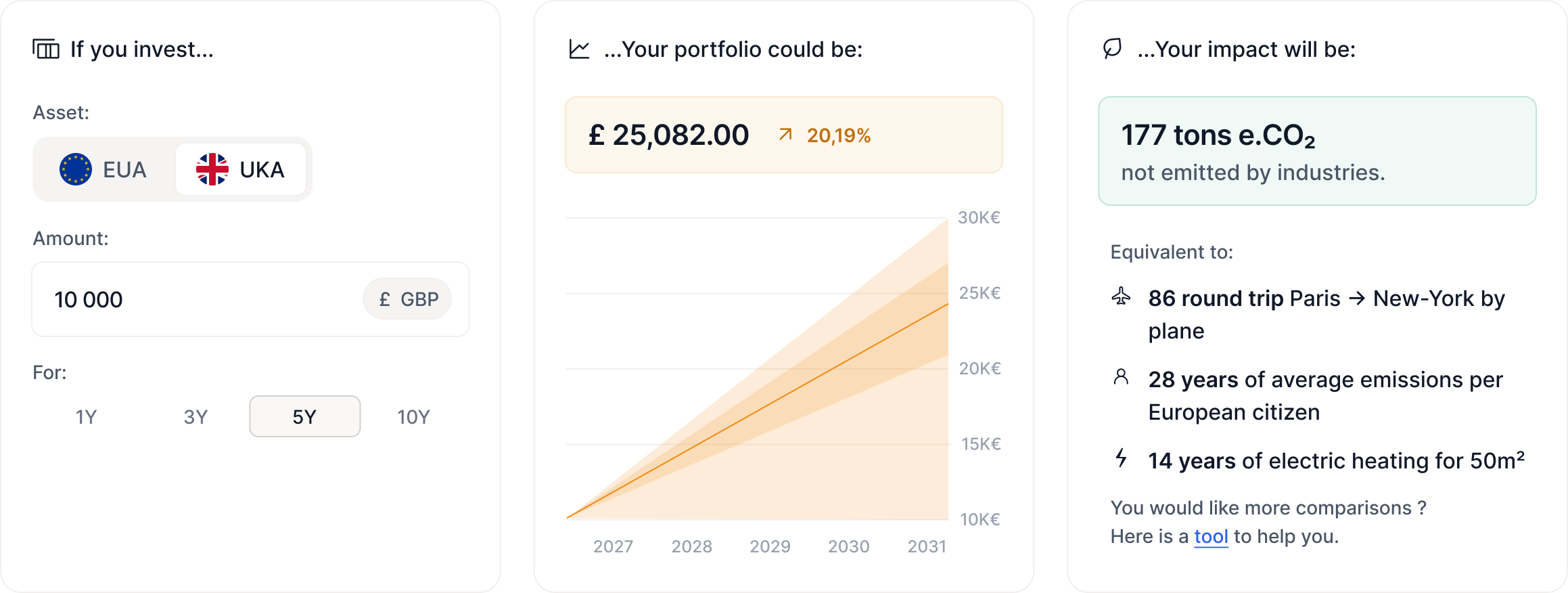
However, these allowances have – recently – also become accessible to individuals, via certain platforms or specialized funds. By buying and holding these allowances without reselling them, the saver removes them from the market, thus preventing their use by a polluting company. In short: each allowance held is a tonne of CO₂ that will never be emitted.
This approach offers a very direct and tangible way to have an impact. It is sometimes described as "activist saving" and may appeal to savers wishing to go beyond traditional green finance, seeking a "pure" investment to contribute directly to the fight against climate change. The diversification benefits of this new type of investment can also be highlighted. While this type of investment remains marginal and still little known today, this asset class seems to have a promising future.
[[cta-guide2]]
Towards Truly Transformative Savings?
One of the major criticisms leveled at responsible investment is greenwashing: products disguised as sustainable, but without real impact. To regain trust, asset managers must offer more transparency and, above all, measure the extra-financial impact of their funds.
Some initiatives are moving in this direction: impact funds with quantified indicators, publication of carbon footprints, public ESG scoring... The idea is no longer just to "do less harm" but to "contribute positively."
More and more, the French want proof: how many tonnes of CO₂ avoided? How many inclusive jobs created? How many impact projects financed? Responsible finance must speak clearly and with figures.
[[cta-impact]]
Institutions and Regulators Play a Decisive Role
To support this movement, banks, insurers, savings platforms, and advisors must play their role as educational intermediaries. Too often, responsible investment remains a niche product, offered only to the initiated.
On the regulatory side, the European Union is pushing in the right direction: green taxonomy, SFDR transparency obligations, harmonized ESG rating... These standards aim to better frame the discourse and guarantee the credibility of sustainable products.
Finally, financial education remains a central pillar. Without understanding the mechanisms, responsible savings cannot become a mass reflex.
An Ecosystem Still Unclear, but Increasingly Intriguing to Savers
Responsible savings are increasingly appealing to the French, but their democratization depends on an essential triptych: information, transparency, accessibility – to which we could add the harmonization of criteria, in order to strengthen investors' confidence that their responsible investments are truly impactful, and that in the long term.
In this context, solutions such as the purchase of carbon allowances show that it is possible to go further, by linking personal finance and real environmental impact.
Investing then becomes a committed act, a powerful lever in the service of a just and sustainable transition. Saving is voting with your money. And this vote, every French person can cast... today.