How to invest in impact projects: debt, equity, or revenue sharing

Rethinking finance through impact
Investing in impact projects means putting money to work for the ecological, social, and economic transition.
Yet with so many existing models, it can be difficult to understand the differences between debt financing, equity investment, and revenue sharing.
[[cta-guide2]]
Debt, equity, or a third way
Two models still dominate how companies are financed.
1️⃣ Debt financing
A company borrows money and repays it gradually with interest.
This model offers visibility and predictability for investors, but it can limit a company’s flexibility — especially in uncertain times.
2️⃣ Equity financing
The company sells part of its ownership to investors, who become shareholders and hope to make a profit when they sell their shares.
This approach brings external capital but also implies ownership dilution and sometimes reduced control for founders.
Between these two models, a third approach has emerged: Revenue-Based Financing (RBF), or revenue sharing.
Revenue-Based Financing: a more flexible and aligned approach
Revenue-Based Financing works on a simple principle:
a company raises funds and repays investors progressively, not through fixed installments, but by sharing a portion of its revenue.
➡ If revenue grows, repayments accelerate.
➡ If revenue slows, repayments adjust automatically.
This mechanism creates a natural alignment of interests between entrepreneurs and investors.
Investors receive returns that mirror the company’s real-world performance, while founders keep their independence.
Financing becomes more adaptable and connected to operational reality.
[[cta-impact]]
Toward more sustainable and aligned finance
Revenue sharing is attracting a growing number of impact investors.
It represents a fairer and more transparent form of financing, where success depends on actual performance rather than speculative growth.
In France, WE DO GOOD has been a pioneer in promoting this model, enabling over 270 companies to raise funds from investors seeking to combine positive impact and profitability.
WE DO GOOD and Homaio: a shared vision of responsible finance
Homaio and WE DO GOOD share the same belief: finance can be a powerful lever for transformation when impact is placed at its core.
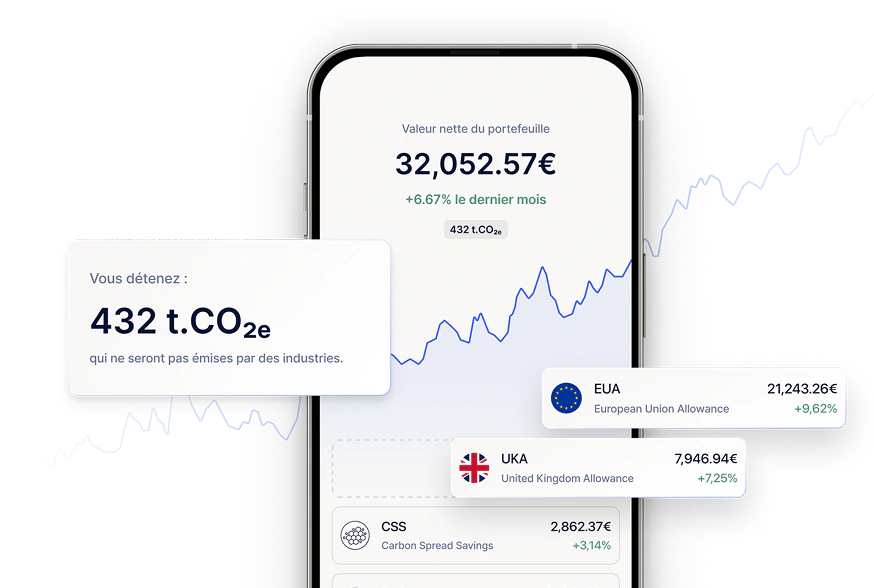
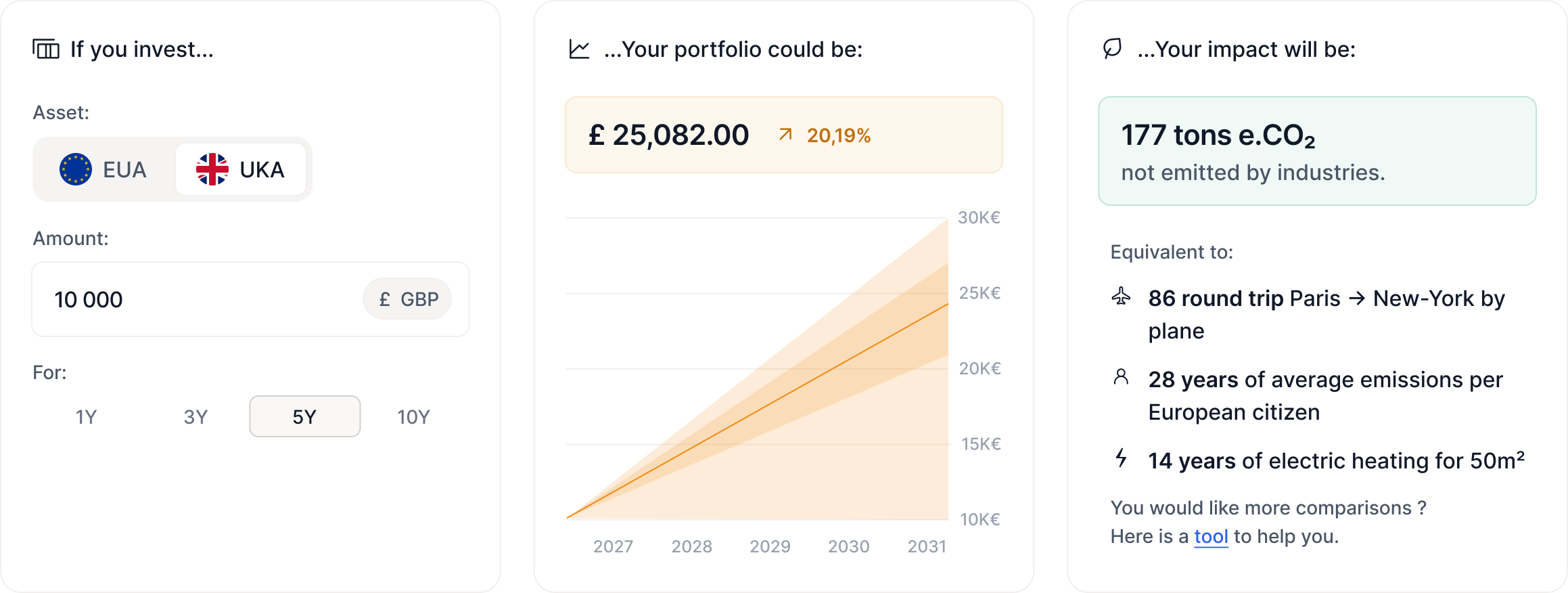
- Homaio enables investors to access tangible climate assets, including European CO₂ emission allowances.
- WE DO GOOD promotes revenue-based financing, directly linking a company’s financial success to its economic performance.
Both approaches move toward a common goal — a more transparent, inclusive, and impact-driven financial system.
A new generation of impact investing
Investment solutions are becoming more diverse, allowing individuals to build portfolios that reflect their values.
Debt, equity, or revenue sharing — each model plays a role in financing the transition toward a more sustainable and responsible economy.