More than just another “Green Fund”

Green investments are trendy.
Climate awareness is ubiquitous. And a significant number of individuals want to express their convictions through their investment choices. The IMF confirms this increasing interest in sustainable investments - in 2021 ESG fund’s mandate exceeded $6 trillion and 66% of deals are “allocated to investors describing themselves as green or socially responsible”.

The many shapes of ESG Funds.
There are many definitions of a green investment, often remaining generalistic and vague. “Funds raised to finance or refinance “green” projects”, according to the OECD. The IMF declares that “a climate bond refers to bonds where the funds raised or the debt service are related to the achievement of environmental objectives”. What are the green projects we are talking about? What are the environmental objectives? Ambiguous, ambiguous…
You get it - there is no universal and rigorous definition corresponding to an environmental reality. There are many standards, many institutions involved, many impact tracking tools. It is hard to operate among all ESG reports and frameworks, here are a few examples by the World economic Forum, the UN, the IPCC, Deloitte….
We live in a global world - global economy, global financial sector. And carbon emissions are global, too. A multitude of standards and regulations engender discrepancies and reduce the sustainability impact of green investments.
[[cta-guide2]]
Green funds are dubiously green.
A lot of supposedly sustainable solutions actually hold questionable environmental impacts. Despite the different regulatory labels, sustainability funds keep investing in highly polluting industries.
For example, “Dark Green” funds define themselves as holding international ethical values. Yet, an investigation led by Investico, Follow the Money and Le Monde showed that 46% of the Dark Green funds also invest in fossil fuel and aviation (Delta Airlines, oil and gas companies like Equinor, RWE…). Nowadays, it is very challenging to identify investment options that actually align with social and climate goals -terms like "sustainable investments," "ESG finance," and "green wealth solutions" are shrouded in opacity and doubt.

There are hundreds of different norms and frameworks, many entirely discretionary. The crackdown by regulating bodies throughout the world is an illustration of the massive overhaul needed in the climate finance space.
Skepticism on the rise.
Investors are catching on. They are increasingly skeptical about sustainability-related investments. A survey conducted by the Saltus Wealth Index showed an increasing skepticism around the legitimacy of the sustainability statements in finance. In 2023, 25% of high net worth individuals do not think that ESG funds are truly environmentally friendly (vs. 15% in 2022) and 23% consider ESG funds postulates as “greenwashing” (vs. 15% in 2022). This is a legitimate concern—how can one be sure about the true environmental impact of their investments if everyone is still investing in oil, gas, and all sorts of carbon-intensive activities?
And yet, the funding gap to meet our collective climate goals and decarbonation targets is massive, in the order of multiple trillion dollars per year. We desperately need assets that convincingly combine returns and impact.
[[cta-impact]]
Beyond hope: prioritize effective assets.
European carbon allowances are designed as an economic trading unit that reduces emissions. They are the backbone of Europe’s decarbonation strategy. It was designed following the Kyoto Protocol with the singular aim of meeting European and global climate targets. And it has a successful, empirical track record at doing just that. It’s a climate finance tool that
Impact assessments published by regulatory bodies (like the European Central Bank’s Working Paper Series) or academic journals (like the “Joint impact of the European Union emissions trading system on carbon emissions and economic performance” article in the Journal of Environmental Economics and Management) affirm that the EU ETS has actual environmental impact. In 2023, they report that emissions have decreased by 2.5% per year in Europe thanks to the system. Overall, the average emissions reduction is 4% per year. European Carbon Allowances are straightforward in that they directly represent real atmospheric molecules, with no hidden terms and conditions.

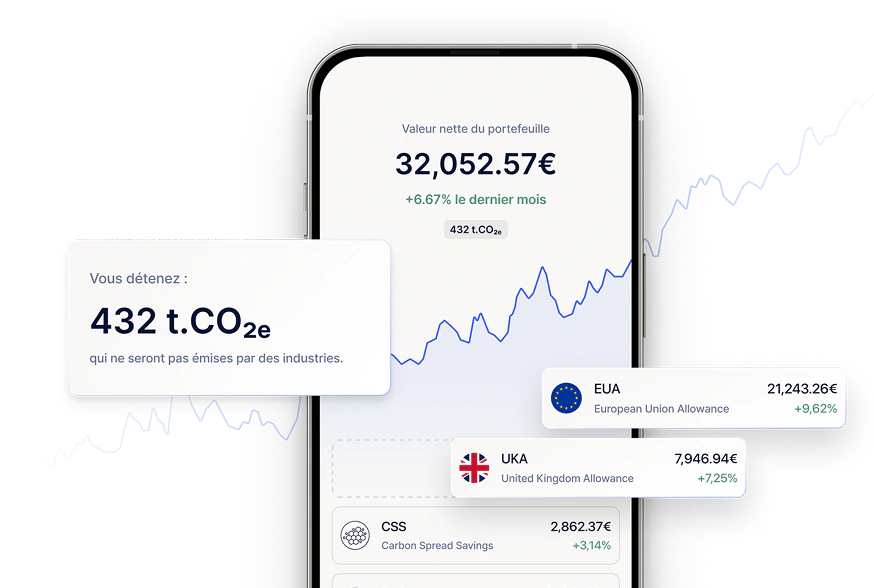
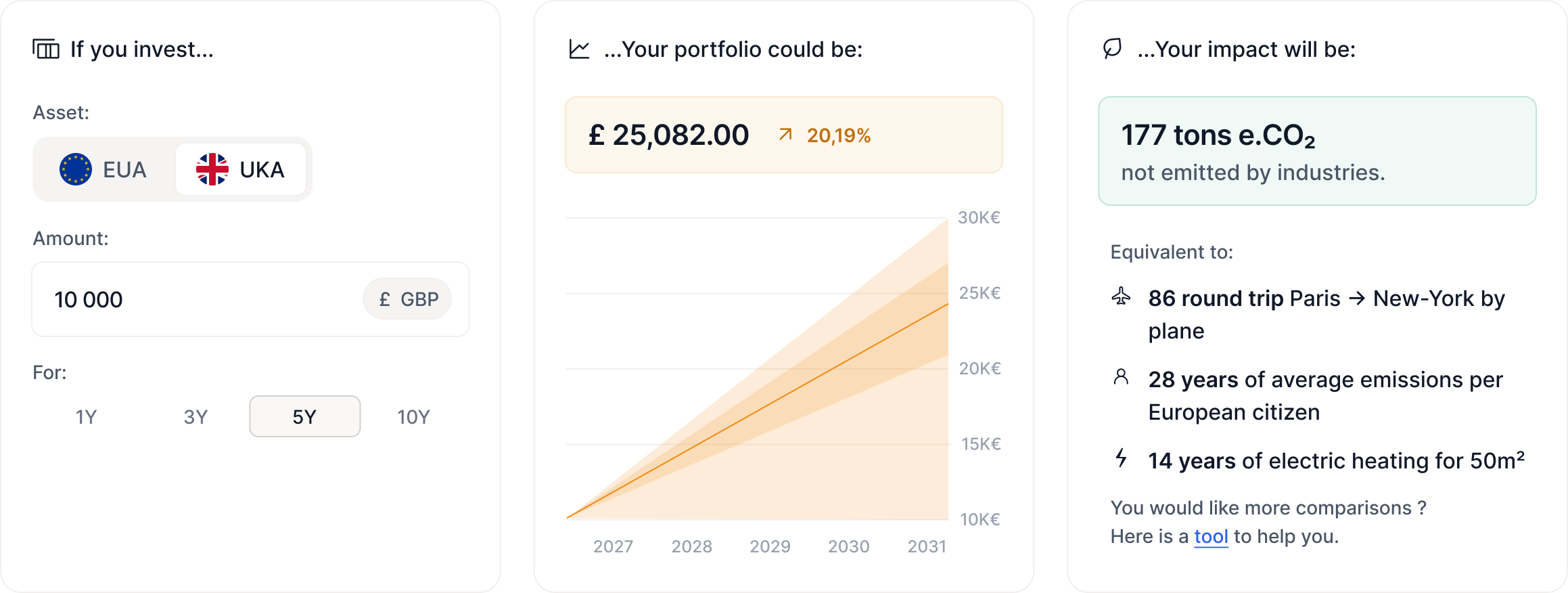
Investors in European Allowances pursuing a “buy and hold” strategy can gain financial exposure to the long-term appreciation of carbon prices, while having a real effect on reducing emissions. It’s a simple investment with tangible, physical impacts. And it’s what Homaio was built to do.
Sources
Dechezleprêtre, A. Nachtigall, D. Venmans, F. The joint impact of the European Union emissions trading system on carbon emissions and economic performance
The ECB, Benefits and costs of the ETS in the EU, a lesson learned for the CBAM design
The European Environmental Agency, EU Emissions Trading System data viewer
The IMF, A Market for Brown Assets To Make Finance Green