Investing in Structured Funds: What You Need to Know

At the intersection of return, capital protection, and long-term visibility, structured funds (fonds à formule) are a unique investment category. They can appeal to investors seeking a degree of security. But what exactly are they? What are the advantages and drawbacks? How can you invest in a structured fund? This guide provides all the answers.
What Is a Structured Fund?
A structured fund is an investment product whose performance depends on a pre-established formula, often linked to the evolution of a stock index or a basket of equities.
This investment vehicle also offers partial or full capital protection at maturity. However, the potential return is capped and depends on the conditions set from the outset. In other words, a structured fund’s performance is tied to the evolution of one or more underlying assets:
- A stock market index (e.g., CAC 40)
- A basket of shares
- An interest rate or even an ESG index related to sustainable finance
The fund issuer defines a formula in advance that determines possible gains and losses based on the asset’s performance.
Structured funds, also called structured products, combine multiple financial instruments (stocks, bonds, derivatives) to spread risk and offer a predetermined potential return.
The Three Key Elements of a Structured Fund
1. Underlying asset
The underlying asset is the core reference for calculating the fund’s performance. Examples include stock indices, baskets of equities, green bonds, or carbon indices.
2. Return formula
The return formula dictates the possible scenarios:
- If the underlying rises by X%, the fund pays Y%
- If the underlying remains stable, a fixed return is paid
- If the underlying falls, part or all of the capital may still be protected
3. Fund duration (maturity)
Most structured funds have a fixed term, usually between 4 and 12 years. At maturity, capital and any gains are returned according to the predefined formula.
[[cta-nl]]
Types of Structured Funds
Structured funds differ by capital protection level and return structure, suiting different investor profiles:
Some products include performance barriers: if the index exceeds a certain threshold, the formula can be deactivated, limiting capital protection. This increases potential returns but also risk.
How a Structured Fund Works
Example: a 6-year structured fund indexed on the Euro Stoxx 50:
- Capital protection: 90% at maturity
- Return scenarios:
- Index > +20% → fund pays 24%
- Index stable (+/-5%) → 2% per year
- Index falls <10% → full capital returned
- Index falls >10% → proportional loss
Structured funds provide predictable risk and return scenarios, attracting investors seeking market visibility while avoiding daily market volatility.
Advantages of Structured Funds
- Flexible capital protection – Partial or full protection at maturity.
- Predefined returns – Investors know in advance under what conditions capital is guaranteed and how gains are generated.
- Portfolio diversification – Combining bonds and derivatives naturally diversifies risk.
- Delegated management – Managed by professionals; investors do not need daily market monitoring.
Risks and Limitations
- Complexity – Concepts like barriers, underlying assets, conditional protection, or capped returns can be hard to grasp.
- Fees – Subscription, management, performance, and early exit fees reduce net returns.
Fee TypeIndicative RateImpactEntry fees1–5%Reduces invested capitalManagement fees0.5–2%/yearReduces net returnPerformance fees10–20% of gainsLimits profits in strong marketsEarly exitVariablePenalizes premature withdrawals
- Risk of underperformance – Stagnant underlying, capped gains, or partial capital protection can lower returns.
- Limited liquidity – Early withdrawal often penalized; suitable for long-term investors.
[[cta-platform]]
How to Invest
Structured funds can be held in:
- Life insurance (assurance-vie) – Common, tax-advantaged after 8 years
- Retirement savings plan (PER) – Contributions deductible from taxable income
- Ordinary brokerage account – Flexible but less tax-efficient
- PEA (equity savings plan) – Some funds eligible for tax exemptions after 5 years
Sustainable finance options now exist with ESG or low-carbon indices as underlying assets.
Choosing the Right Structured Fund
Key considerations:
- Capital protection: full, partial, or conditional
- Underlying asset: index, equity basket, or sustainable theme
- Investment duration: 4, 6, or 10 years
- Expected return under various market scenarios
- Fees and taxation
- Risk level
Expected Returns
Recent years: top-performing funds yield 4–7% per year, depending on market conditions and fund duration.
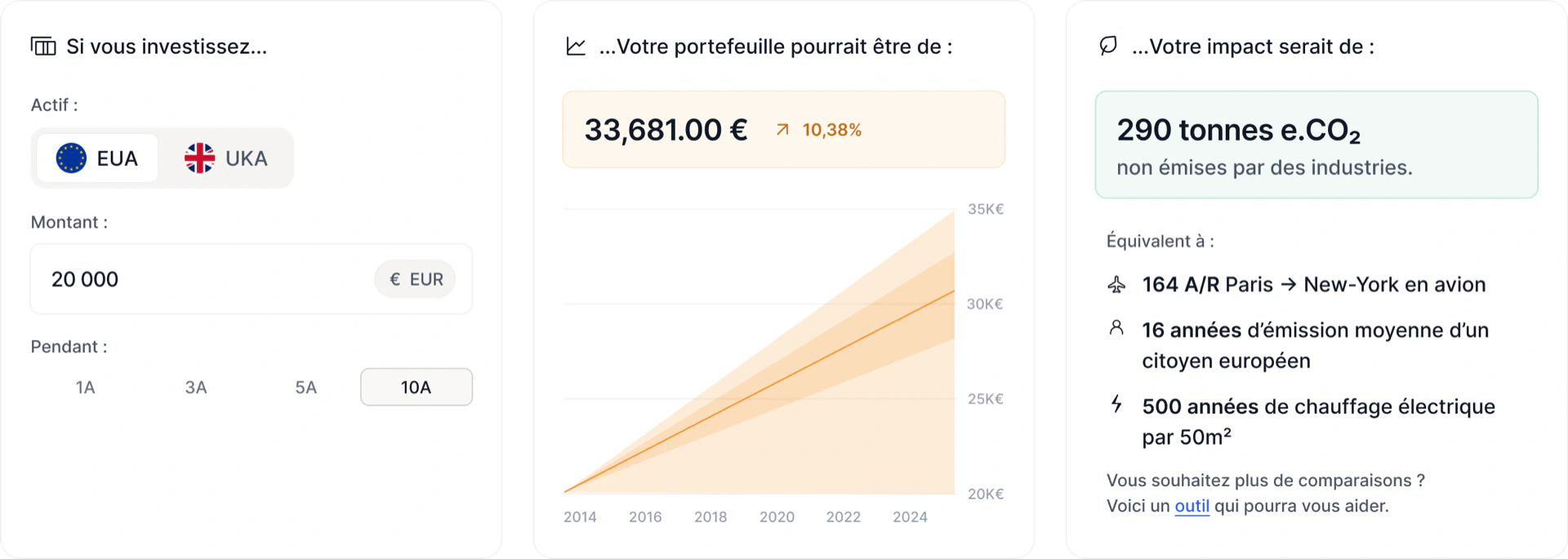
[[cta-simulateur]]
Best Practices
- Check unfavorable scenarios in documentation
- Compare multiple funds: duration, return, protection, fees
- Assess your investor profile: conservative, balanced, or dynamic
- Diversify your portfolio
Professional advice from a certified financial advisor is recommended.
Structured Funds and Sustainable Finance
New-generation structured funds use responsible underlying assets: low-carbon indices, green equity baskets, or green bonds.
Example: a low-carbon European index grows 15% → fund pays 20%, contributing indirectly to the energy transition.
Structured funds now allow combining responsible investment with predefined returns, aligning profitability and impact.
Conclusion
Structured funds offer a middle ground between guaranteed security and market performance. They provide visibility on returns and partial or full capital protection, subject to investment duration.
For investors seeking portfolio diversification with a responsible investment dimension, sustainable structured funds represent a promising way to support the ecological transition while targeting controlled returns.