European Carbon Market: Mechanics, Trends, Prices, and 2026 Outlook

Climate change is the defining challenge of our century. To address it, the European Union has established a powerful tool, often described as the "cornerstone" of its climate policy: the Emissions Trading System, or EU ETS.
As we approach 2026, the market is entering a critical transition phase. As of late 2025, we are observing particularly robust market dynamics, marked by a growing disconnect from energy prices and record positioning by institutional investors.
In this comprehensive guide, we decode the market's mechanics, the exclusive data from this year-end, and the new role private investors can play via Homaio.
1. Understanding the Mechanism: The "Polluter Pays" Principle
The carbon market operates on a simple yet formidable principle: "Cap and Trade."
The European Union sets a maximum limit (the Cap) on greenhouse gas emissions allowed for all covered sectors. This cap decreases every year. For every tonne of CO2 emitted, a company must surrender a "carbon quota" (known as an European Union Allowance - EUA).
The mechanism in a nutshellThe UE defines the maximum amount of pollution allowed (supply) and lets the market determine the price of that pollution (demand).
Why is this system effective?
It is the law of supply and demand applied to the climate. As the cap lowers, the price rises, making pollution economically unsustainable.
In plain EnglishThe carbon market doesn't dictate how to reduce emissions; it simply makes pollution increasingly expensive so that it becomes more profitable to invest in clean technologies.
2. Market Status Late 2025: Bullish Dynamics Confirmed
Analysis of the final months of 2025 reveals a powerful underlying trend. Unlike in previous years, where carbon prices blindly followed gas prices, we are witnessing a paradigm shift.
Key Figures for Year-End 2025
November 2025 marks the fifth consecutive month of gains for European carbon allowances.
- Performance: The market has posted growth of +16% Year-to-Date.
- Price Level: We are currently at the highest levels seen in two years.
- Technical Support: The psychological threshold of €80 has held firm recently, confirming a solid base.
Three Factors Driving This Acceleration
- The Gas/Carbon Decoupling: This is the major development of this year-end. Carbon prices are rising even as the energy context remains less tense. The carbon market is now driven by its own dynamics, becoming less dependent on gas fluctuations.
- Investment Fund Appetite: Investment funds have increased their long positions (buying) to all-time records. This is a strong signal of confidence in the asset's future valuation.
- Resilience Against Industry: Remarkably, even the drop in European industrial production hasn't been enough to stop this rally. The supply constraint is outweighing weak industrial demand.
[[cta-discover]]
3. 2026 Outlook: Heading Towards a Supply Shock
While 2025 is ending on a bullish note, the fundamentals for 2026 are even tighter on the supply side.
A Drastic Reduction in Supply
The European Commission has confirmed volumes for the coming year.
The number that matters: -8%The supply of allowances available in 2026 will be approximately 8% lower than in 2025. This is a massive reduction that will mechanically tighten the market.
Political Stability and ETS 2
The recent delay of ETS 2 (the carbon market for buildings and road transport) has paradoxically reassured the markets. Rather than being seen as a failure, it is viewed as a credible compromise that signals long-term political stability.
What to Expect in the Coming Months?
Two technical factors will support prices in the short term:
- The Winter Auction Pause: As every year, auctions halt temporarily, reducing the daily inflow of new allowances.
- Weather: Potential cold snaps could increase energy demand.
The market is already pricing in very strong growth for 2026.
4. Why Can Private Investors Now Position Themselves on the EU ETS?
In the context of this bull market, opening access to individuals makes perfect sense.
What Role Does Individual Demand Play?
When you invest via Homaio, you aren't just buying paper. You are impacting the system.
Good to know: The "Induced Scarcity" EffectBy purchasing physical carbon allowances, private investors remove them from circulation. They are no longer available for industrial players.
Result: This tightens the market, supports the carbon price above critical levels (like the current €80), and forces industries to reduce their emissions faster.
Investment Strategy
As highlighted in our latest analyses, we are deeply in a transition phase. For those looking to enter or increase their position:
- Small price dips can be excellent entry opportunities.
- The underlying trend remains structurally bullish due to the programmed reduction in supply.
[[cta-impact]]
5. Investing with Homaio: Transparency and Security
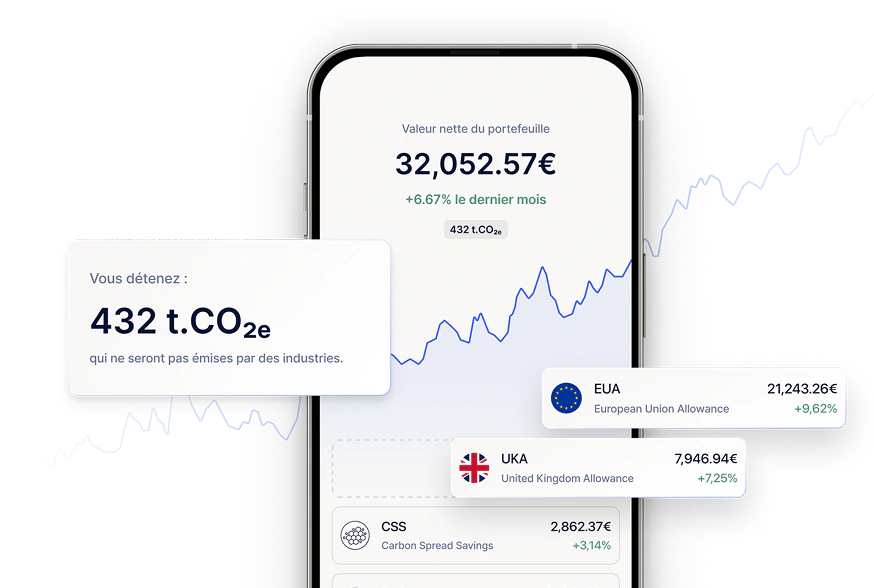
At Homaio, we have opened this institutional asset class to individuals through a robust structure.
A Bond Backed by Real Assets
We allow investors to purchase Bonds (Security Tokens).
What this means in practiceWhen you invest with Homaio, we purchase the equivalent in tonnes of CO2 on the regulated market. These tonnes are sequestered. As long as you hold your bond, these tonnes cannot be used by a polluter.
Why Choose Homaio?
- Credibility: Founded by experts in carbon finance and tech.
- Security: Allowances are held in custody on the official European Union registry.
- Liquidity: Homaio ensures liquidity, allowing you to exit your position when needed.
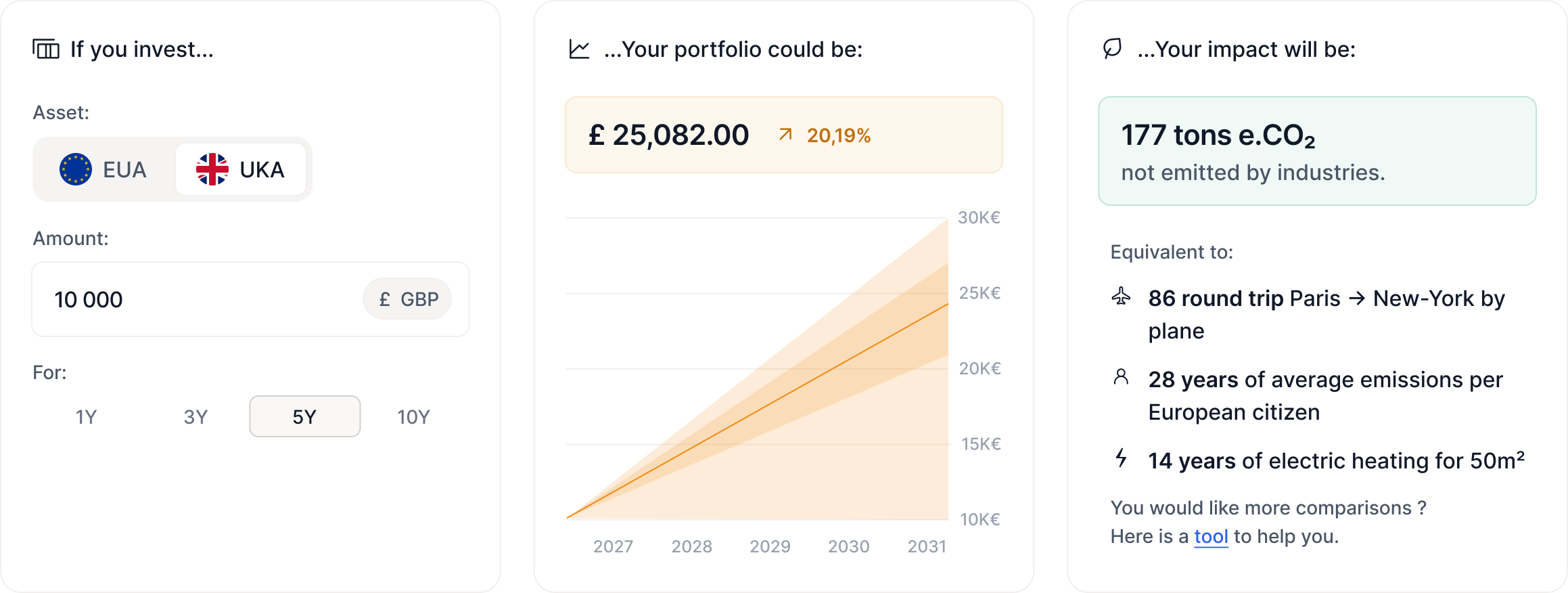
[[cta-simulateur]]
FAQ: Frequently Asked Questions
What is the European Carbon Market (EU ETS)?
It is a market regulated by the EU where "rights to pollute" are traded. It aims to limit emissions by setting a maximum cap that decreases every year.
What is the carbon price in late 2025?
The market is trading at its highest levels in two years, with solid support around €80 per tonne and 16% growth over the year 2025.
Why is the outlook for 2026 bullish?
Mainly due to a supply shock: the volume of available allowances will drop by about 8% compared to 2025. Additionally, investment funds are positioning themselves heavily on the buy side.
How can an individual invest?
Via specialized platforms like Homaio, which issue bonds backed by real carbon allowances. This allows you to benefit from the market's financial performance while participating in decarbonization by removing allowances from circulation.
Is this the right time to invest?
Analysts note that the market is in a strong dynamic. Price dips are often considered interesting entry points before the scarcity scheduled for 2026 kicks in.
Disclaimer: Investing involves risks, including loss of capital. Past performance is not indicative of future results. This article is for informational purposes only and does not constitute investment advice.