Sustainable ETFs: How to Invest in Responsible Funds in 2026

The era of "green hype" is officially over. In 2026, sustainable investing has reached its age of maturity. Investors are no longer satisfied with vague "green" promises; they demand transparency, measurable impact, and robust performance.
But before diving into the top performers, let’s get back to basics. An ETF (Exchange-Traded Fund) is essentially a "basket" of securities. Instead of buying a single stock, you buy a single share of the fund, which gives you exposure to hundreds of companies at once. When applied to sustainability, these funds allow you to diversify your portfolio across the leaders of the ecological transition in one click.
The Top 10 Sustainable ETFs for 2026
For investors looking for immediate exposure, these tickers represent the most liquid and widely followed sustainable funds in the market today.
[[cta-discover]]
Understanding the "Shades of Green"
Not all "green" ETFs are the same. If you’ve ever wondered why a sustainable ETF like ESGV still holds shares in major banks, the answer lies in the selection methodology. In 2026, understanding these nuances is key to avoiding greenwashing.
Selection Methodologies
- Best-in-Class: This approach selects the most virtuous companies within every sector. It doesn't necessarily exclude "bad" industries but rewards the leaders within them.
- Exclusion (Negative Screening): This is the simplest form. It removes specific sectors such as fossil fuels, weapons, tobacco, or gambling from the portfolio.
- Thematic Investing: These funds go 100% into a specific solution, such as solar energy or water treatment. This is often where you find the highest "pure-play" exposure.
The Regulatory Labels (SFDR)
In Europe, the SFDR (Sustainable Finance Disclosure Regulation) provides a clear framework:
- Article 8: Funds that promote environmental or social characteristics (often called "Light Green").
- Article 9: Funds that have a dedicated sustainable investment objective (often called "Dark Green").
How to Choose the Right ETF for Your Portfolio
Choosing an ETF requires more than just looking at the name. Follow these three steps:
- Define Your Convictions: Are you looking for a broad diversification (Article 8) or a high-conviction bet on a specific technology like Green Hydrogen (Article 9)?
- Analyze the "Top 10 Holdings": Always look under the hood. The top ten companies in a fund often represent 40-50% of its total weight. Ensure these companies align with your values.
- Check the Costs and Eligibility: Look at the TER (Total Expense Ratio). In 2026, a competitive sustainable ETF should ideally have fees below 0.50%. For European investors, check if the fund is PEA-eligible to optimize your tax strategy.
The Secondary Market Trap: Why ETFs Aren't Enough
While ETFs are excellent tools for wealth diversification, they face a structural limit: The Secondary Market Trap.
When you buy an ETF on the stock market, you are buying shares from another investor, not from the companies themselves. Your money does not directly flow into the company's bank account to build new wind turbines or research carbon capture. It is a signal of support, but the direct climate impact is indirect and often diluted.
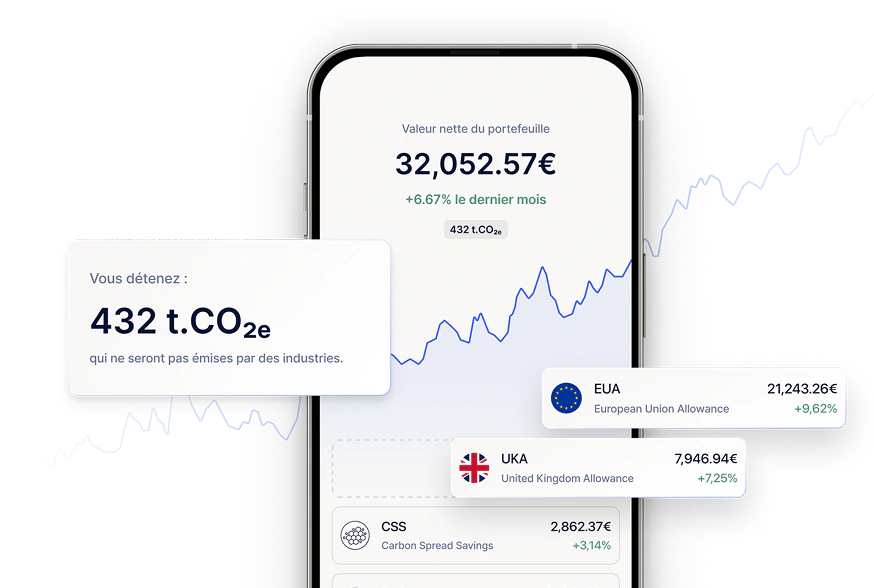
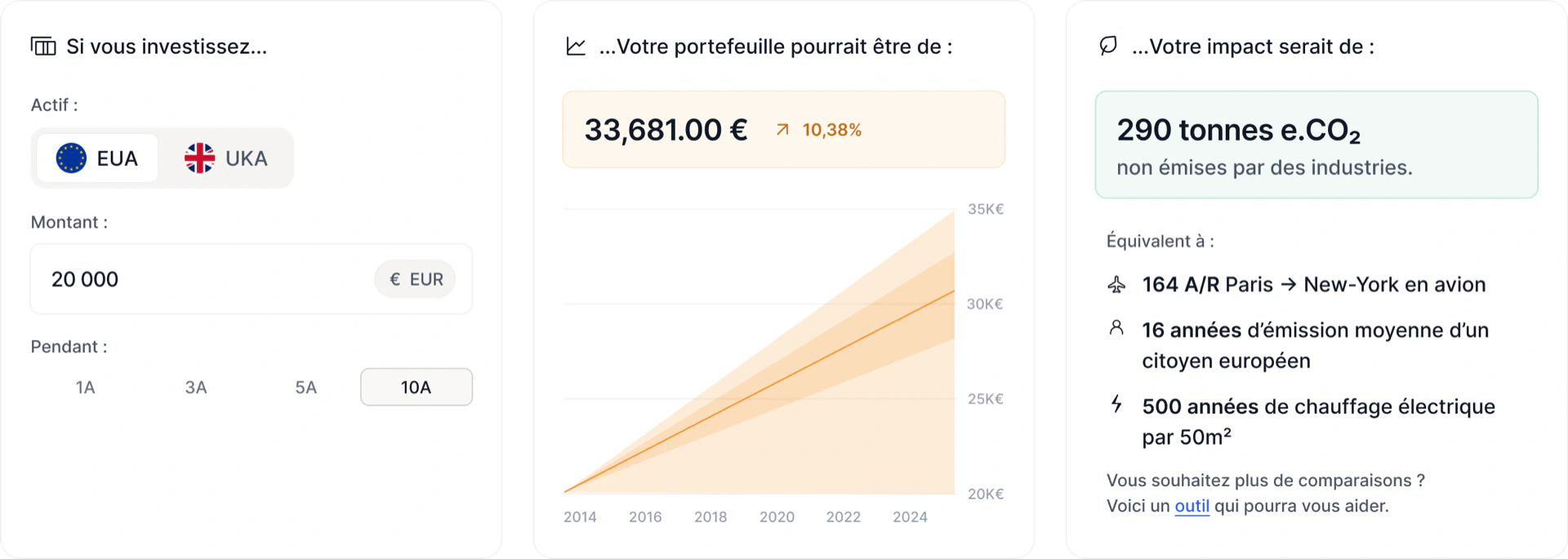
To achieve direct additionality, investors in 2026 are increasingly looking toward the European Carbon Market (EU ETS). By holding carbon allowances, you are participating in a regulated system that legally limits the total amount of CO2 industrial polluters can emit.
[[cta-simulateur]]
Summary: Comparing Your Options in 2026
Conclusion: A Multi-Layered Strategy
Sustainable investing is no longer a "one-size-fits-all" approach. For a resilient 2026 portfolio, the most sophisticated strategy involves layering your investments:
- Use Sustainable ETFs for broad market growth and liquid diversification.
- Complement them with Carbon Quotas to ensure your capital has a direct, measurable impact on industrial decarbonization while benefiting from an asset class decorrelated from the stock market.
The question is no longer if you should invest sustainably, but how deeply you want your capital to drive change.
Disclaimer: This article is for informational purposes only and does not constitute financial advice. All investments carry risks, including the risk of capital loss. Past performance is not indicative of future results.


.avif)